BLOOM: Benefiting the Lives of Offspring and Mothers
A perinatal prevention program targeting the Thrive factor for the good of mothers and babies.
Background and Objectives
Bloom is a perinatal prevention program developed at Washington University School of Medicine in St. Louis that supports caregivers from pregnancy through the first year after birth, a critical period for both maternal wellbeing and infant development. The program focuses on optimizing infant developmental outcomes.
Research has demonstrated that key environmental supports during pregnancy and the first year of life powerfully impact early neurodevelopment. Recent findings from Washington University indicate that a “Thrive factor” composed of supportive and attuned caregiving, environmental stimulation, nutrition, neighborhood safety, and regular circadian rhythms and sleep during the first year is associated with improved cognitive abilities (IQ), reduced behavioral symptoms, and increased cortical gray matter volume at ages 2 and 3 years (Luby et al., 2024).
Bloom is grounded in this scientific evidence and directly targets the Thrive factor through a structured, evidence-based intervention. The program is designed to address persistent inequities in maternal and infant health, with a focus on supporting underserved families and those who have difficulty accessing care in rural and urban areas across the state. By integrating accessible technology with personalized clinical care, the program aims to reach populations that may face barriers to traditional healthcare services and improve health outcomes for both mothers and infants in a highly cost effective way.
What We’re Working On
We are developing a comprehensive intervention model that combines digital health technology with clinical care delivery to support maternal and infant health:
Bloom Mobile App: Digital support for caregivers
The Bloom mobile application provides personalized, evidence-based content on self-care, mental health, child development, and caregiving practices. Care team members can recommend targeted resources between sessions to address individual family needs. The app also provides a curated directory of community and institutional resources based on the mother’s zip code. All app content is clinically and scientifically informed, adheres to established medical guidelines, and is informed by feedback from caregivers in the St. Louis community.
Clinician delivered telehealth sessions
In collaboration with St. Louis area healthcare professionals, Bloom delivers structured telehealth sessions via videoconference that provide care coordination, coaching on caregiver–infant interaction, and emotional support. Care team members use a guided and known effective “teach and coach” methodology, observing mothers interacting with their infants via video, identifying strengths, and supporting caregivers in responding to infant cues. Session content addresses common challenges including infant soothing, feeding, stress management, maternal attunement, breastfeeding support, and maternal and infant sleep optimization.
Care team members receive structured training prior to program delivery and ongoing clinical supervision throughout implementation. Supervision protocols include immediate consultation pathways when complex or safety related situations arise, ensuring the wellbeing of both caregivers and families.
Our Team
Joan Luby
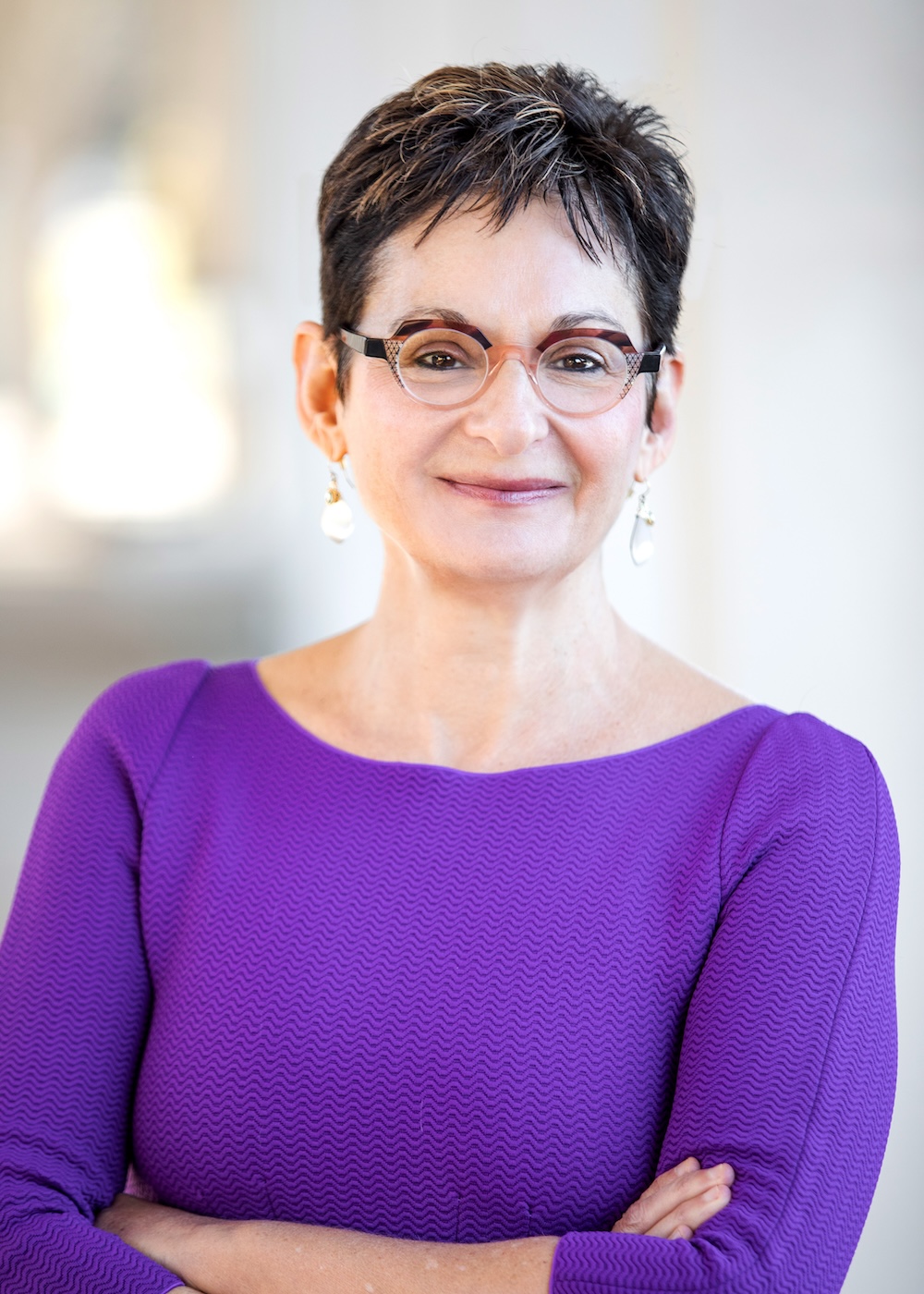
Dr. Luby is the Samuel and Mae S. Ludwig Professor of Child Psychiatry at Washington University. She is founder and director of the Washington University School of Medicine Early Emotional Development Program, which focuses on the study and treatment of mood disorders in preschool-aged children, early onset psychopathology and early environmental determinants of neurodevelopment and risk and resilience for psychopathology. Dr. Luby’s clinical work and research also focuses on the emotional development of young children and how deviations in this trajectory relate to risk for early onset disorders and predict their longitudinal course. Dr. Luby and colleagues have conducted the first large-scale empirical studies to establish the criteria for identifying and validating the characteristics of depression in preschoolers and developed an early psychotherapeutic intervention that proved both powerfully and durably effective. Dr. Luby and colleagues are currently investigating the role of experience and, more specifically, early psychosocial factors on brain development and risk and resilience for psychopathology and optimization of early developmental trajectories. Related to this, early psychotherapeutic interventions that focus on enhancing the parent child relationship in the hopes of optimizing developmental trajectories is a key aim of the program. Dr. Luby earned her medical degree from Wayne State University and completed her residency in psychiatry and fellowship in child psychiatry at Stanford University. She was honored with NARSAD’s Gerald L. Klerman Award for Outstanding Clinical Research in 2004 and the Washington University Faculty Achievement Award in 2015, the Ruane Award for Child and Adolescent Psychiatry in 2020, and the Washington University School of Medicine Dean’s Medal for Research Excellence in 2025. She was elected to the National Academy of Medicine in 2021.
Email: lubyj@wustl.edu
Ana Luiza Penna

Ana Luiza Penna serves as technical lead and coordinator for Bloom. She holds a PhD in Population Health Sciences from Harvard University, where her dissertation explored nurturing care environments across multilevel systems. Ana Luiza is an early-life intervention scientist who designs, implements, and evaluates parenting and maternal health programs with global reach. Her work translates evidence on early childhood development into scalable, high-impact interventions for vulnerable populations in low-resource settings, spanning the full lifecycle from evidence synthesis and program architecture to measurement design, pilot implementation, and policy translation. As Principal Investigator, she has led mixed-methods research on women’s empowerment and responsive caregiving in rural Pakistan, dose-response analyses of Brazil’s Criança Feliz program, and municipal studies linking multisectoral services to child development outcome. Her expertise bridges population health, digital innovation, and evidence-based policy across Brazil, Pakistan, and the US.
Email: p.ana@wustl.edu
Yosef Chernet

Yosef Chernet is a staff scientist at the Early Emotional Development Program within the Washington University School of Medicine Department of Psychiatry, where he works on the BLOOM project supporting perinatal health research. An international medical graduate trained in Ethiopia, he earned his Master of Public Health from Washington University in St. Louis. His work sits at the intersection of clinical medicine and public mental health, with interests spanning maternal, child, and reproductive health, health services, and population-level interventions. He is a founding member of the BLOOM team and works on all aspects of the project, from content development to program coordination to research.
Email: c.yosef@wustl.edu
Lauren Nacke

Lauren Nacke, MSW, LCSW (she/her) PhD student in Public Health Sciences at Washington University in St. Louis. With over a decade of experience as a perinatal social worker and therapist, her studies examine how structural racism and policy environments shape maternal and infant health outcomes. Her research integrates mixed methods, systems science, and community-engaged approaches to investigate inequities in prenatal and postpartum care, Medicaid policy, and perinatal health systems. Grounded in intersectionality and reproductive justice frameworks, Lauren partners with community stakeholders to develop policy-relevant, equity-centered solutions that strengthen access to high-quality, respectful maternal healthcare.
Email: l.nacke@wustl.edu
The development and testing of BLOOM was supported by a generous gift from Walter and Cynthia Metcalfe to further research into how adversity and neglect, as well as nurturing and support, during pregnancy and from birth to age 3 affect the developing brain
Please contact bloomapp@wustl.edu with any questions.
Click here to view the Privacy Policy